

⭐⭐⭐⭐
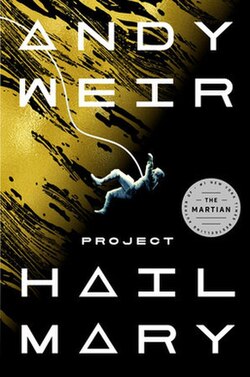
Another of this year’s re-reads for me, and revisiting Project Hail Mary by Andy Weir felt oddly well-timed considering the film adaptation has recently come out. I haven’t actually seen the movie yet, but it definitely pushed the book back to the front of my mind. Sometimes a re-read can flatten the excitement a little because you already know every twist and reveal, but honestly, this one still worked incredibly well for me the second time around.
What struck me most coming back to it is just how readable it is. The chapters fly by. Even when Weir gets deep into the science, equations, problem-solving, and all the technical detail, it never really feels heavy. There’s a real sense of momentum throughout the novel. Every chapter feels like another obstacle to overcome, another impossible situation that somehow gets solved through logic, experimentation, panic and sheer stubbornness. It scratches that same itch as The Martian, where competence itself becomes exciting.
Ryland Grace is still a really enjoyable protagonist as well. He’s funny without feeling overly quippy, intelligent without feeling untouchable, and flawed enough that the emotional moments actually land. On a re-read, I appreciated the structure even more, too. The way the story drip-feeds information through the flashbacks could have easily become frustrating, but instead, it keeps the tension going constantly. Even knowing the reveals ahead of time, I still found myself eager to get to certain moments again.
And honestly, Rocky remains the standout. It’s rare for a character dynamic in science fiction to feel this genuinely charming without becoming overly sentimental, but the friendship here really carries the book emotionally. A lot of hard sci-fi can sometimes feel cold or clinical, but Project Hail Mary balances the technical side with a surprisingly warm centre. There are moments between the characters that are genuinely funny, awkward and weirdly heartfelt in a way that sneaks up on you.
That said, I do think the book loses a little bit of momentum in places during the middle section. Some of the problem-solving sequences go on just slightly too long, and there are moments where the “science puzzle” structure starts to feel repetitive. It never fully dragged for me, but on a second read, I noticed the formula a bit more clearly. There’s also still that very specific Andy Weir style of humour that either works for you or it doesn’t. Thankfully, it mostly works for me, though occasionally the dialogue edges a little too close to sounding the same across characters.
Still, it’s one of those books that’s just incredibly easy to recommend. It’s accessible sci-fi without feeling simplistic, emotional without becoming melodramatic, and packed with enough tension and big ideas to keep things exciting all the way through. Re-reading it actually made me more curious to eventually watch the film adaptation rather than less. I’m interested to see how they handle the scale of it, but especially the relationship at the heart of the story, because that’s really what makes the whole thing work.
Overall, still a solid 4-star read for me. Not quite perfect, but hugely entertaining, surprisingly heartfelt, and one of those books that reminds me how much fun science fiction can be when it fully embraces wonder.

