

⭐
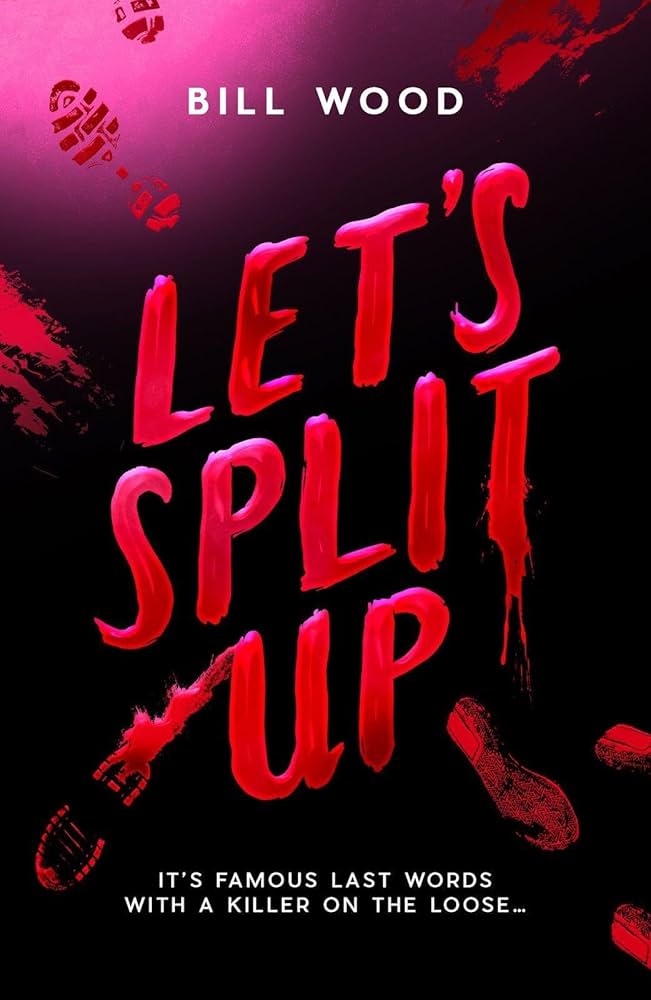
I had high hopes for Let’s Split Up by Bill Wood, especially with its promise of a Scooby-Doo meets slasher vibe. Unfortunately, this book is a letdown on almost every front.
The writing is painfully simplistic. It reads like a first draft, with clunky dialogue and flat prose. The characters speak in a way that feels more suited to a younger audience, not the young adults it’s marketed to. It’s as if the author couldn’t decide whether to write for teens or tweens, and ended up with a muddled tone that doesn’t resonate with either.
The characters are paper-thin stereotypes with no real development. They make baffling decisions, often acting in ways that defy logic. The adults are equally dim-witted, adding to the frustration. Instead of feeling like a group of friends on a thrilling adventure, they come across as a collection of clichés stumbling through a poorly written script.
The setting is another major flaw. There’s little to no description of locations, making it difficult to visualise the scenes. The lack of atmospheric detail leaves the story feeling flat and uninspired. A haunted manor should evoke a sense of dread, but here, it might as well be a school gymnasium for all the mood it sets.
The book attempts to pay homage to classic horror series by dropping names from other franchises. While the first few references might elicit a chuckle, they quickly become tiresome. The constant name-dropping feels more like a crutch than a clever nod, detracting from the story rather than enhancing it.
At its core, Let’s Split Up is a Scooby-Doo rip-off with slasher elements tacked on. The premise is lifted straight from the classic cartoon, with a group of teens investigating a spooky mystery. However, instead of the charm and wit of Scooby-Doo, we get a derivative plot filled with predictable twists and uninspired scares.
In conclusion, Let’s Split Up is a missed opportunity. It fails to deliver on its promise of a nostalgic, thrilling adventure. Instead, it offers a shallow, poorly written imitation that doesn’t do justice to the genres it attempts to emulate. Save your time and skip this one.
 Gareth Ellis - Author