

⭐️⭐️⭐️⭐️
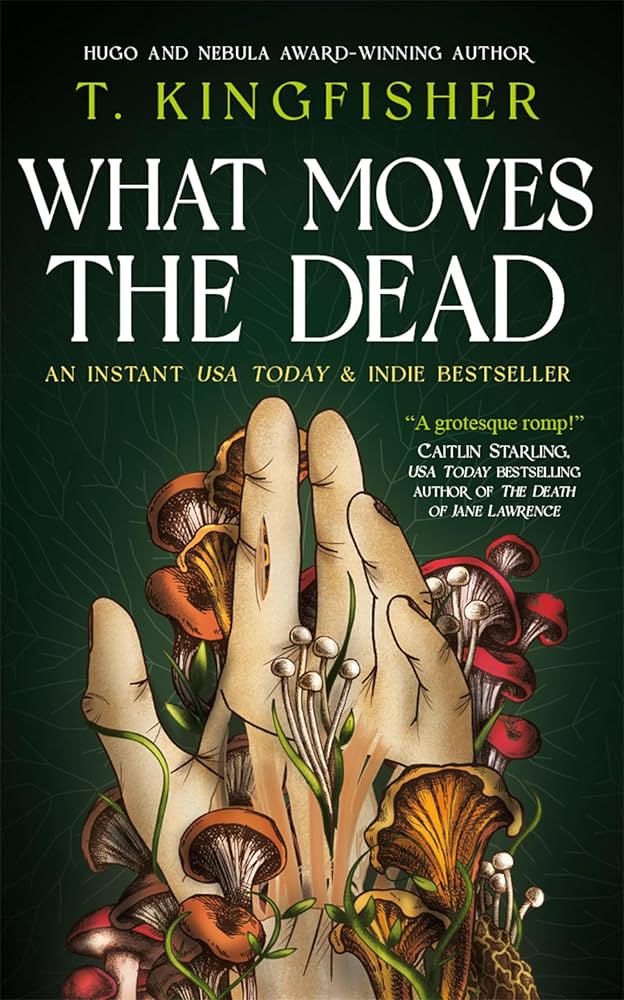
T. Kingfisher’s What Moves the Dead quietly unsettles you rather than going for big shocks, and that’s exactly where it shines. A retelling of Poe’s The Fall of the House of Usher, it keeps the bones of the original story but dresses them in something far stranger, funnier, and biologically grotesque.
The atmosphere is thick from the outset. The Usher house feels wrong in that slow, creeping way — not immediately terrifying, but deeply unhealthy, like a place that’s been rotting for a long time and is finally starting to show it. Kingfisher makes the setting feel alive without over-explaining. The fungi, the animals, the landscape itself… everything feels slightly out of alignment with the natural order.
Alex Easton is a strong lead: pragmatic, observant, and refreshingly blunt. Their voice brings a surprising amount of warmth and dry humour to what could otherwise be a relentlessly bleak story. That humour never undercuts the horror — it actually makes the unsettling moments land harder, because you’re not emotionally braced for them. One moment you’re smirking at an aside, the next you’re feeling deeply uncomfortable about what’s happening in the woods.
Where the novella really excels is in its blend of gothic horror and speculative biology. The explanations for what’s going wrong don’t strip away the mystery, but they give the horror a grounded, creeping plausibility. It’s the kind of story that makes you look at nature a little differently afterwards, especially anything that spreads quietly and doesn’t look dangerous at first glance.
That said, it doesn’t quite hit full marks for me. The novella length means things move quickly, sometimes a bit too quickly. A few scenes, particularly towards the end, could have lingered longer to really let the dread ferment. The climax feels more abrupt than overwhelming, and while it’s effective, it doesn’t quite deliver the gut-punch I was hoping for.
Still, this is a sharply written, intelligent piece of horror that knows exactly what it’s doing. It’s eerie, funny in a very dry way, and genuinely unsettling in places. If you like gothic horror with a modern edge, or stories that let the horror seep in rather than leap out at you, this is well worth your time.
A solid four stars — creepy, clever, and memorable, even if I wanted just a little more time to wallow in the rot.
 Gareth Ellis - Author