

⭐⭐⭐⭐⭐
As part of my chronological read-through of the Discworld series by Terry Pratchett, I’ve finally finished Going Postal, and I can honestly say it might be one of the most entertaining entries in the entire series so far. Even after reading a lot of Discworld already, this one still managed to feel fresh, inventive, and packed with Pratchett’s signature humour.
The story begins with Moist von Lipwig, a professional con artist who has finally run out of luck. Instead of a simple execution, however, he’s offered a choice by the ever-calculating Lord Vetinari: take on the seemingly impossible job of reviving Ankh-Morpork’s long-abandoned Post Office, or face the consequences. Naturally, Moist takes the job—although at first it’s mostly because he prefers not being dead.
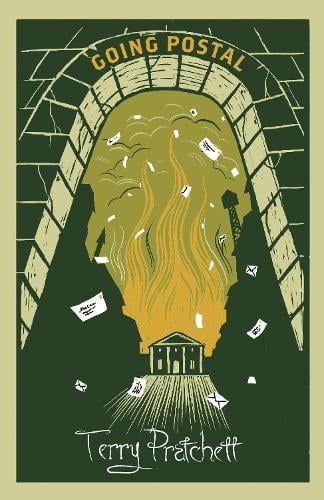
What follows is a wonderfully chaotic attempt to bring a crumbling institution back to life. The Post Office itself feels almost like a character. It’s dusty, neglected, and filled with decades of undelivered letters stacked in leaning towers. The moment Moist starts poking around the place, you can sense the enormous potential for disaster… and also for something oddly heroic.
Moist is a brilliant protagonist. He’s charming, slippery, and constantly thinking in terms of angles and tricks. The fun of the book comes from watching someone who is used to manipulating people suddenly finding himself responsible for something that actually matters. Pratchett handles that shift really well. Moist never stops being a con man at heart, but he gradually starts putting those talents to better use.
The supporting characters are just as memorable. Adora Belle Dearheart is sharp-tongued, fiercely principled, and more than capable of seeing through Moist’s charm. The surviving Post Office staff are delightfully strange in the way Discworld characters often are, each bringing their own quirks to the chaos. And then there are the golems, who quietly steal several scenes with their thoughtful and oddly touching presence.
Of course, the humour is where the book truly shines. Pratchett’s writing is full of clever observations, absurd situations, and jokes that land perfectly because they’re so casually delivered. You’ll be reading along and suddenly hit a line that makes you stop and laugh out loud. It’s that effortless style that makes Discworld so enjoyable to read.
There’s also a surprisingly sharp satire running through the story. The conflict between the revived postal service and the clacks network—Discworld’s version of a semaphore communication system—turns into a commentary on monopolies, technological change, and the way big corporations can swallow up competition. Like a lot of Pratchett’s work, the jokes are layered on top of some very real ideas.
One thing that stood out to me during this chronological read-through is how confident the writing feels at this stage in the series. The world of Ankh-Morpork is so well established that Pratchett can jump straight into the story without needing much setup. The result is a fast-moving, tightly plotted book where every scene pushes the story forward.
And, as always, any appearance by Lord Vetinari is worth the price of admission. He remains one of the most fascinating characters in the series—calm, calculating, and always several steps ahead of everyone else in the room.
By the time the story reaches its climax, the book turns into a wonderfully elaborate scheme involving trickery, spectacle, and a bit of genuine heroism. It’s exactly the kind of ending that suits Moist perfectly.
Reading this as part of a chronological Discworld journey has been a real treat. It’s funny, clever, and surprisingly heartfelt beneath all the jokes. Pratchett had a remarkable ability to take something as ordinary as delivering letters and turn it into an exciting, hilarious adventure.
An easy five stars from me, and one of the standout Discworld books so far.
 Gareth Ellis - Author