
⭐️⭐️⭐️⭐️⭐️
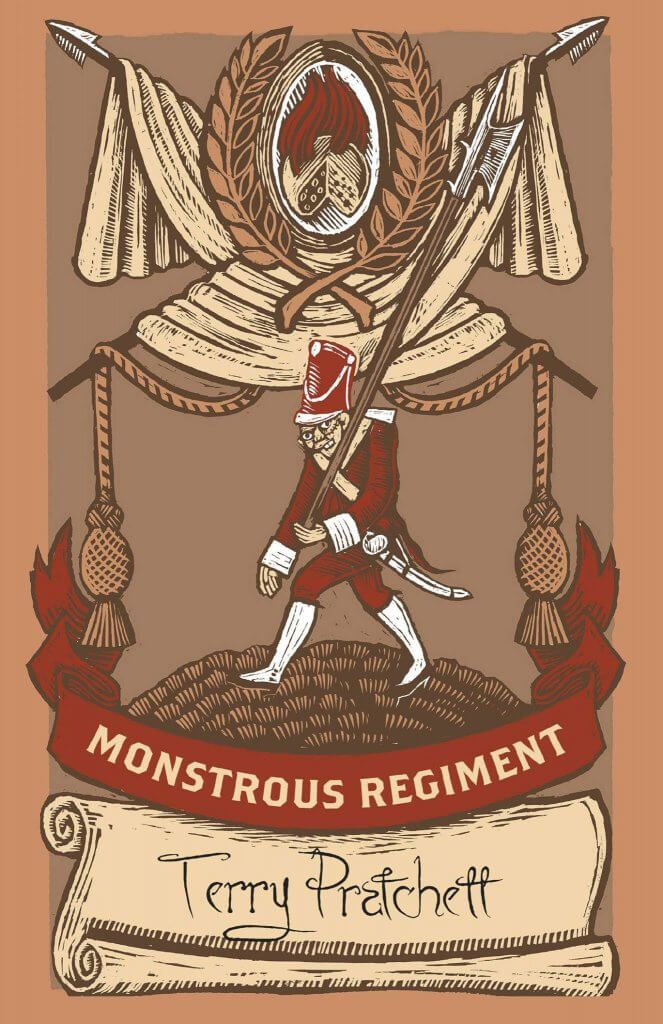
Monstrous Regiment was next up in my chronological read-through of the Discworld books, and it ended up being one of those moments where the project suddenly feels even more worthwhile. I went in expecting something solid and funny, and came out feeling like I’d just read one of Pratchett’s most pointed and emotionally grounded novels. It completely knocked me sideways. It’s funny in that very particular Terry Pratchett way, but it’s also sharp, angry, kind, and unexpectedly emotional. I laughed a lot, then found myself pausing more than once because something had landed a bit harder than I was ready for.
On the surface, it’s a war story about a small, deeply unimpressive-looking regiment heading off to fight for Borogravia, a country held together by contradictory religious rules and sheer stubbornness. You follow Polly Perks, who disguises herself as a boy to join the army in order to find her missing brother. It sounds simple, but Pratchett uses that setup to dig into far bigger ideas than you might expect going in.
The characters are fantastic. Not grand heroes or fearless warriors, just ordinary people muddling through something grim and absurd. Polly is a brilliant protagonist: practical, observant, stubborn, and quietly furious at the way the world works. Jackrum is unforgettable, equal parts comforting and terrifying, and watching the rest of the regiment slowly reveal who they really are is deeply satisfying. Every revelation feels earned rather than played for shock value.
What really stayed with me is how the book handles war. It doesn’t dress it up or turn it into a noble adventure. It’s muddy, pointless, bureaucratic, and cruel, and most of the damage is done by people who never have to see the consequences of their decisions. Pratchett takes apart nationalism, blind faith, and military tradition with humour, but there’s real anger under the jokes. It feels uncomfortably relevant, which only makes it hit harder.
Despite all that, it’s still very funny. The humour isn’t just punchlines; it’s in the observations, the character dynamics, and the way the absurdity of rigid systems is allowed to speak for itself. There’s a lot of warmth here too. At its heart, this is a book about identity, about being told who you’re allowed to be, and about choosing to push back, even when the cost is high.
By the end, I had that familiar post-Pratchett feeling of having read something that’s entertaining, thoughtful, and far more humane than it first appears. Monstrous Regiment might not always get mentioned first when people talk about Discworld, but for me it deserves to be near the top. Funny, angry, compassionate, and clever in a way that sticks with you long after the last page.
 Gareth Ellis - Author