
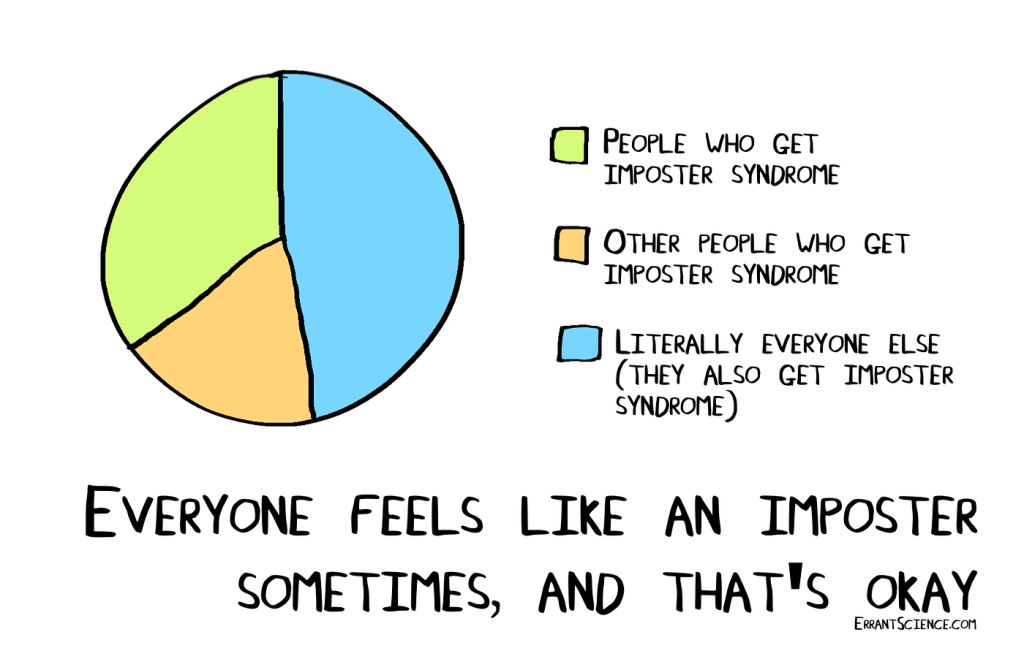
I’m sitting with my laptop, fingers poised above the keyboard, heart racing. I’ve been here before. The cursor blinks at me mockingly, as if saying, “What makes you think you can do this?” This, my friends, is imposter syndrome, and it’s an all-too-familiar companion on my writing journey.
Let’s rewind a bit. When I first started writing, it wasn’t because I dreamed of being a famous author or seeing my name in print. I started writing because there was a story in my head that simply wouldn’t leave me alone. Characters and plots swirled around in my mind, begging to be let out, and the only way to silence them was to put pen to paper, or rather, fingers to keyboard. There was a certain freedom in writing just for the sake of it, away from prying eyes and judgment. But as I began to share my work, the shadow of doubt crept in. Was my writing good enough? Did I even have a right to call myself a writer?
Imposter syndrome, if you haven’t experienced it, is like having an inner critic on steroids. It whispers (or sometimes shouts) that you’re a fraud, that any success you’ve had is a fluke, and that sooner or later, everyone will see through the façade. It can be paralysing.
For me, it struck hardest when I started receiving feedback on my writing. Positive comments were brushed off as kindness from friends, while constructive criticism felt like confirmation of my worst fears. I remember one particularly tough critique where the reader pointed out several editing issues. Instead of seeing it as an opportunity to improve, I spiralled into self-doubt. Maybe I wasn’t cut out for this after all.
But here’s the thing about writing – it’s deeply personal yet incredibly universal. We all have stories to tell, and each voice is unique. Realizing this was a game-changer for me. My turning point came during a university lecture. Surrounded by fellow writers who shared similar fears, I found solace in those around me. We all had moments of doubt, but we also had moments of triumph.
One exercise that particularly helped was writing a letter to myself as a writer. I acknowledged the presence of imposter syndrome and thanked it for keeping me humble, but I also told it to step aside. There was work to be done. This simple act of externalizing my doubts made them less daunting.
Another crucial step was embracing the concept of growth. Writing is a craft, and like any craft, it requires practice and perseverance. Mistakes aren’t a sign of failure but a part of the learning process. I began to view feedback as a tool for growth rather than a measure of my worth. Although sometimes critiques still land hard.
Over time, I developed a few strategies to keep imposter syndrome at bay. I set small, achievable writing goals and celebrated each milestone. I also discussed my work with peers at university as we all shared and helped each other. Most importantly, I made a conscious effort to be kind to myself. Writing is hard, and it’s okay to have off days.
If you’re struggling with imposter syndrome, know that you’re not alone. Every writer, from novices to best-selling authors, faces these doubts at some point. The key is to keep writing, to push through the uncertainty, and to remember why you started in the first place.
Writing is an act of bravery. It’s putting a piece of your soul out into the world and hoping it resonates. So, next time that cursor blinks at you menacingly, take a deep breath, and start typing. Your voice matters, and the world needs to hear your story.
 Gareth Ellis - Author